A website for a service business: from first visit to enquiry
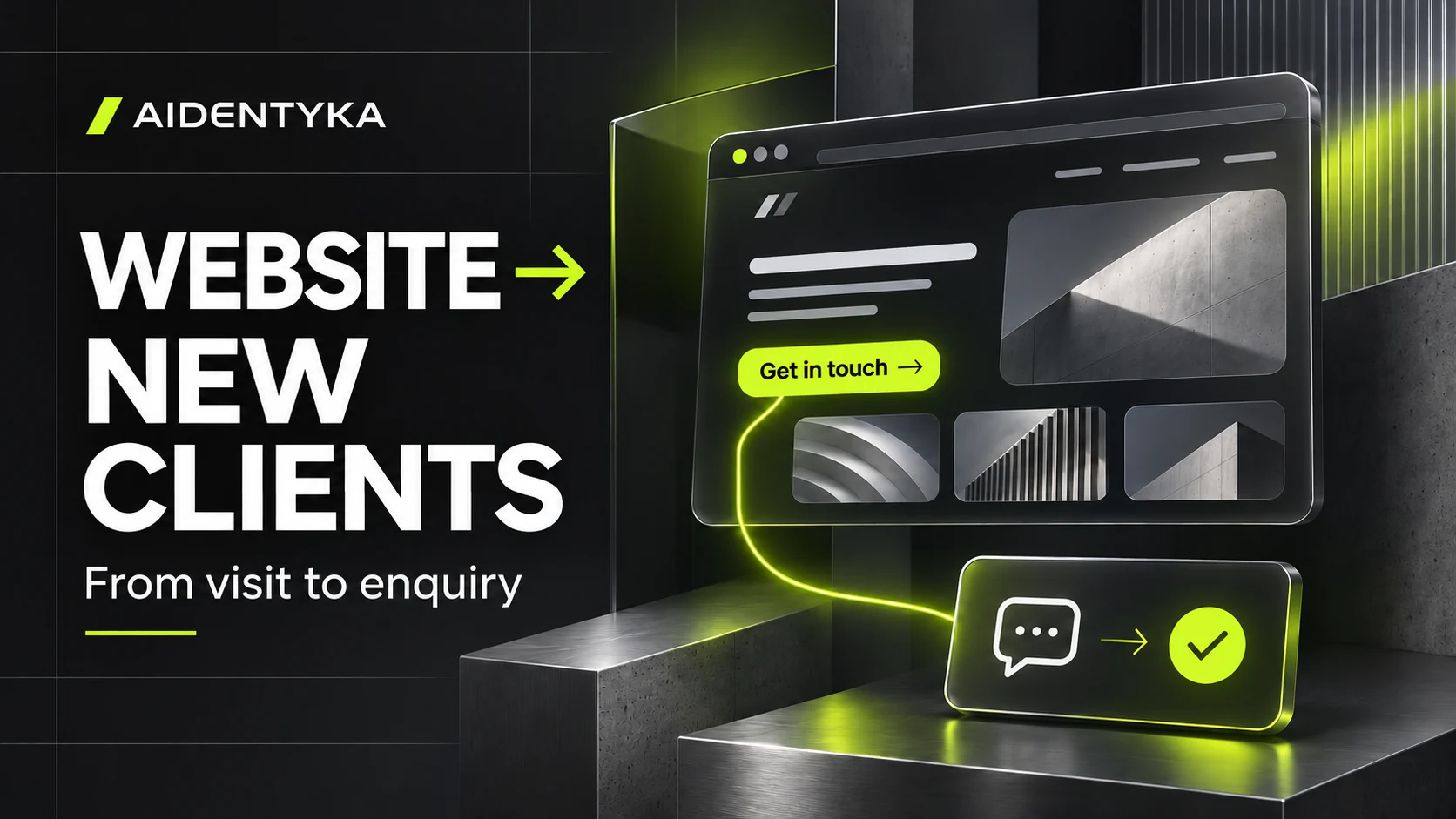
A service business website gives your company an owned destination for attracting prospective clients. You can bring people to it from Google, advertising, social media and referrals. To turn that interest into an enquiry, visitors need three answers: whether your service fits their needs, why they can trust you and how to discuss their project.
Website development therefore starts with the customer journey. For a furniture manufacturer, the goal may be an estimate request; for a renovation company, a discussion about a property; for a design studio, a project consultation. Pages, examples and calls to action should support that particular next step.
Start with the action the business needs
“We want a modern website” describes an appearance, but it does not explain how the site will support sales. A more useful goal is: “A visitor finds our service, sees relevant work and sends enough information for a consultation.” That gives you a basis for choosing pages and functionality.
- An estimate request: a prospect describes the task and leaves a contact method; the team clarifies the scope.
- A consultation: a visitor chooses a contact route or an available time if a booking calendar is part of the functionality.
- A service-specific enquiry: the team receives context and can direct the request to the right specialist.
Choose one primary action for each page. An alternative contact method can sit alongside it, but visitors should understand which step will help them resolve their particular question.
A website as an additional lead source: where people come from
Publishing a website does not create a stream of enquiries on its own. You need a way to reach an interested audience and a destination that matches its expectations. For a service business, it is useful to distinguish several acquisition journeys.
- Organic search: someone looks for a specific service or an answer. A dedicated, useful page explains how your offer relates to that need.
- Advertising: an advert leads to a page with the same service, conditions and next action. Visitors should recognise the offer after clicking.
- Social media and referrals: the website provides a place to check your experience, explore projects and send an enquiry.
For example, a campaign for bespoke kitchens can lead to a kitchen service page with relevant interiors. On a general homepage with many unrelated services, the visitor has to find the continuation of the advert independently.
Google’s SEO Starter Guide recommends a clear structure, useful content and meaningful links. Applying those principles does not guarantee specific rankings. Plan content and acquisition work beyond the website launch.
What belongs on a page that leads to an enquiry
Prospective clients judge an offer through their own project. They need to understand the deliverable, the boundaries of the service and how working together will look. A practical service page can cover six areas.
- What you do and who it is for. Name the service, client type and service area where location matters.
- What the client receives. Explain the scope and what is handed over when the work is complete.
- Examples of delivery. Show real projects with the original need and the solution.
- How the engagement works. Describe stages, required inputs and the client’s involvement.
- What affects cost and timing. Explain the variables, available scope options or verified estimates.
- The next step. Offer a consultation, estimate request or discussion about a particular task.
If pricing is bespoke, explain which inputs are needed for an estimate. “The quote depends on area, materials and the work included” gives more context than “Price on request” alone. Use delivery times your team can support for the agreed scope.
Case studies help clients understand what they are paying for
A gallery attracts attention; a project explanation helps a client assess relevant experience. Describe the original need, your role, the work carried out and a result you can substantiate. For a complex service, explain one important decision, such as how a product selection or estimate-request journey was organised.
In the S-TIM Furniture case study, furniture categories and interior projects provide a reference for a specific consultation. In the Goodwin Windows case study, product and service sections help visitors identify a request concerning windows, doors or installation.
These are examples of website structure. Lead counts, sales growth or time saved by staff belong in a case study when data supports them. Real photographs, a verified testimonial and a concrete account of the work are also useful evidence for prospective clients.
Make the next step clear and manageable
A button should explain the action: “Request an estimate”, “Discuss your renovation” or “Find an office solution”. Nearby, explain what to send and what happens after the enquiry. State a response time only when the team can consistently meet it.
For an initial conversation, a name, contact method and short project description may be sufficient. If dimensions, photographs or a file are needed, explain why. Choose fields according to what the team needs to respond, rather than trying to collect the full project brief immediately.
The route can finish in a form, messaging app, phone call or booking calendar. Choose a method that suits both your customers and your team. Test it on a phone: does the intended contact open, is the service context clear and does the user understand when the enquiry has been received?
Measure enquiries and sales as well as visits
To assess business value, connect website analytics with a record of actual enquiries. A click on Telegram indicates an intention to start a conversation. A received message or successfully submitted form establishes a later stage. The team then determines whether the request fits your services and whether it becomes an order.
- Visits: how many people arrive and which channels bring them.
- Received enquiries: how many messages, forms or calls actually reach the team.
- Relevant leads: how many enquiries match your offer.
- Sales: how many engagements are agreed and the revenue they generate.
An illustrative calculation: 1,000 visits and 30 received enquiries produce a 3% enquiry conversion rate. If acquiring those visits costs UAH 6,000, the cost per enquiry is UAH 200. These figures demonstrate the formulas; they are not AIDENTYKA performance data or a forecast for your business.
Compare consistent periods, sources and lead definitions. If a client buys several weeks after a consultation, allow enquiries time to pass through that sales cycle. Exclude your own test submissions and avoid counting one contact more than once.
A landing page or a business website?
For one focused offer and an advertising launch, landing page development may be a suitable starting point. A single page brings the offer, proof and call to action into a sequential journey.
If the company has several services, different audiences or plans to develop organic search visibility for separate offers, consider a corporate website. It provides room for service pages, case studies, team information and useful articles.
Select the technology after defining the requirements. A CMS, a ready-made platform or custom development can each be appropriate depending on integrations, functionality and maintenance resources. Our business website development service explains the wider scope of work.
What to prepare before commissioning the website
- Your priority services and typical client profiles.
- One real sales journey, from the first question to the agreed order.
- Project examples, photographs and testimonials cleared for publication.
- Service scope, pricing variables and genuine timing constraints.
- An acquisition plan: search, advertising, social media or referrals.
- The enquiry destination and the person responsible for responding.
- The languages, integrations and functionality required at launch.
These inputs help shape the website around an actual sales process. The website brief guide explains how to prepare them.
Frequently asked questions
Do we need a website if clients already come from Instagram?
A website can provide an additional channel and a place for a more detailed service presentation. It can bring together case studies, terms and a consultation request, with separate pages for search or advertising. The value depends on where your audience chooses a provider.
Does a new website guarantee leads from Google?
No. Search accessibility, a clear offer, useful content and acquisition work are all needed. Competition, demand and the way your team handles enquiries also influence the outcome.
Can enquiries go to a messaging app?
Yes. Provide a clear transition and a reliable response process. Separate messaging-app clicks from enquiries actually received when evaluating the channel.
When should we assess the launch results?
Test the contact journey before launch. Evaluate business outcomes after enough relevant traffic has arrived and the corresponding sales cycle has had time to finish. One day or a handful of visits is generally insufficient for a meaningful conclusion.
Build the website around your sales process
AIDENTYKA develops business websites, from structure and design to implementation and launch preparation. We start with the clients you want to attract, the need you address and what should happen after an enquiry.
Send a description of your service to AIDENTYKA on Telegram and explain how clients currently find you. We can discuss the pages, enquiry journey and scope you need. If you already have a website, start with a website audit.