AIDENTYKA / PROJECT CASE STUDY
S-TIM Furniture — a bespoke furniture website
A portfolio-led website that helps people explore custom furniture through completed interiors and take the next step towards a consultation.
- Format
- Corporate website and portfolio
- Market
- Poland and European markets
- Industry
- Bespoke furniture
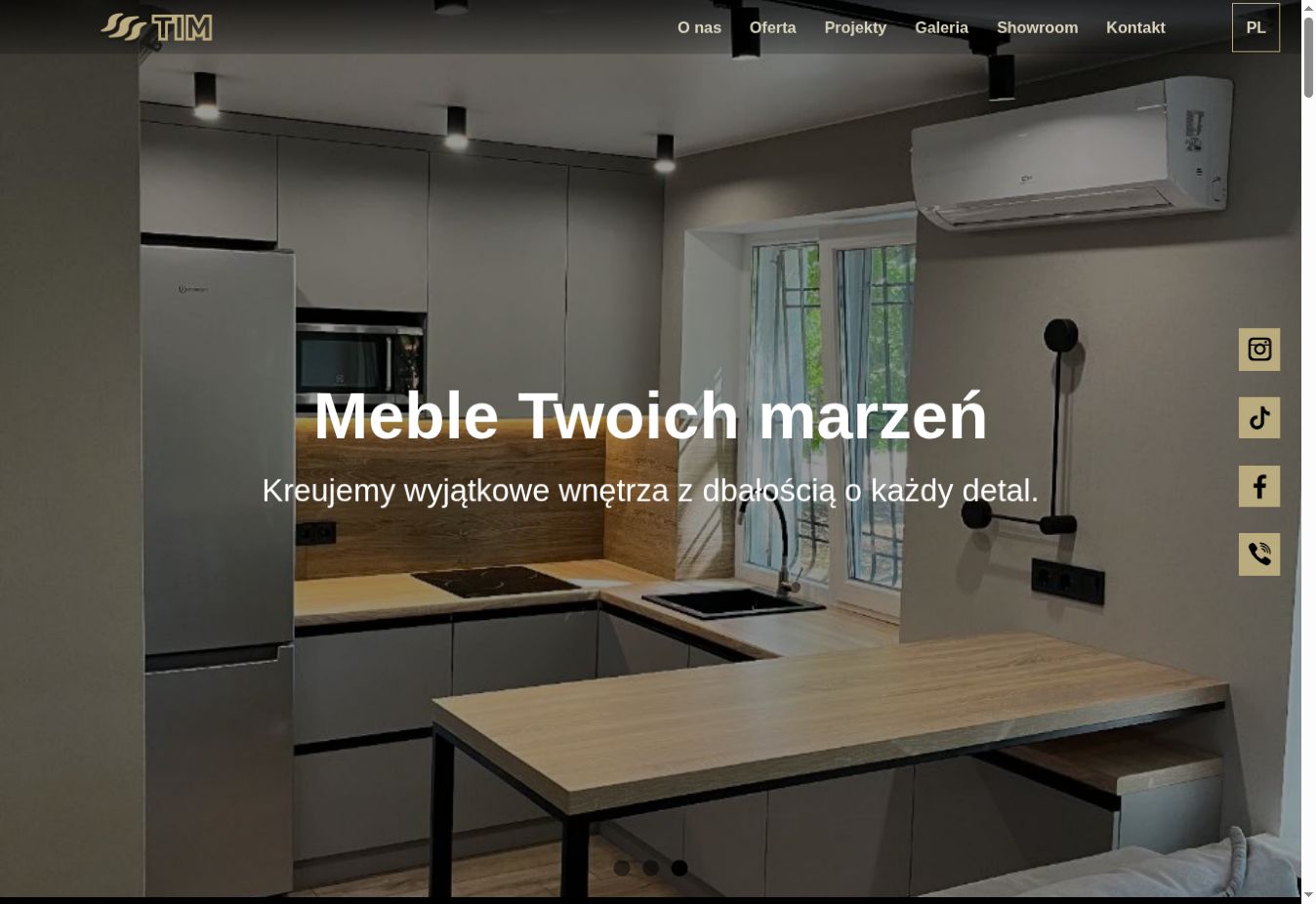
Bespoke furniture is rarely selected by product name and price alone. Customers want to understand style, solutions for different rooms and the relationship between furniture and space. S-TIM Furniture presents this kind of business through service categories, interior photography and direct contact with the team.
Project context
The website serves both people with an existing interior design and visitors still collecting ideas for a kitchen or living space. The first group needs relevant examples; the second needs accessible inspiration and a clear way to ask questions.
For a furniture business, a portfolio is part of the selection process. Its structure should connect photographs to a recognisable service so visitors can find solutions relevant to their own rooms.
Website structure
- Furniture categories for kitchens, bedrooms, living rooms and commercial spaces.
- Project portfolios featuring interior photographs.
- A gallery for comparing styles and spatial solutions.
- Company information and a route to the showroom.
- Contact details for consultation and individual project enquiries.
Organising the offer by room provides a familiar starting point. After reviewing relevant examples, visitors can discuss a specific space rather than an abstract custom furniture service.
Visitor journey
- Choose the service category that matches the room or project.
- Explore interiors, details and examples with a suitable visual direction.
- Contact the team about a consultation or showroom visit.
Visual approach
Large photographs communicate proportions, finishes and the relationship between furniture and architecture. Giving these images enough room makes the portfolio easier to understand without adding unnecessary decoration.
Text supports the visual narrative by explaining the service and the next step. A visitor who has finished browsing should be able to find contact information without restarting navigation elsewhere.
Search and content
Bespoke furniture websites benefit from substantive service and project pages. Service categories can address searches for kitchens or custom furniture, while case studies demonstrate those services in a specific setting. Descriptions of the space, functional requirements and design decisions offer more value than an unexplained gallery. Geographic references should reflect the business’s actual service area rather than a list of unrelated target cities.
What this format delivers
A portfolio turns visual interest into a useful starting point for a conversation. Customers can refer to a relevant example and describe what they want for their own space. The website presents capabilities and supports first contact.
Questions about the project
Does a bespoke furniture website need a shopping basket?
Not necessarily. If pricing depends on measurements, materials and configuration, a consultation can be a more appropriate next step than a standard checkout.
Why separate services from the project portfolio?
Services explain the work a business offers; projects provide concrete examples. Together they help visitors decide whether the company is relevant to their requirements.
Planning a similar website?
Tell us about your business, audience and the action you want visitors to take. We can discuss the structure, content and scope of your project.