AIDENTYKA / PROJECT CASE STUDY
KATI Shoes — a women’s footwear online store
A fashion catalogue that connects the appeal of a collection with practical decisions about model, size and colour.
- Format
- E-commerce website
- Market
- Ukraine
- Industry
- Footwear and accessories
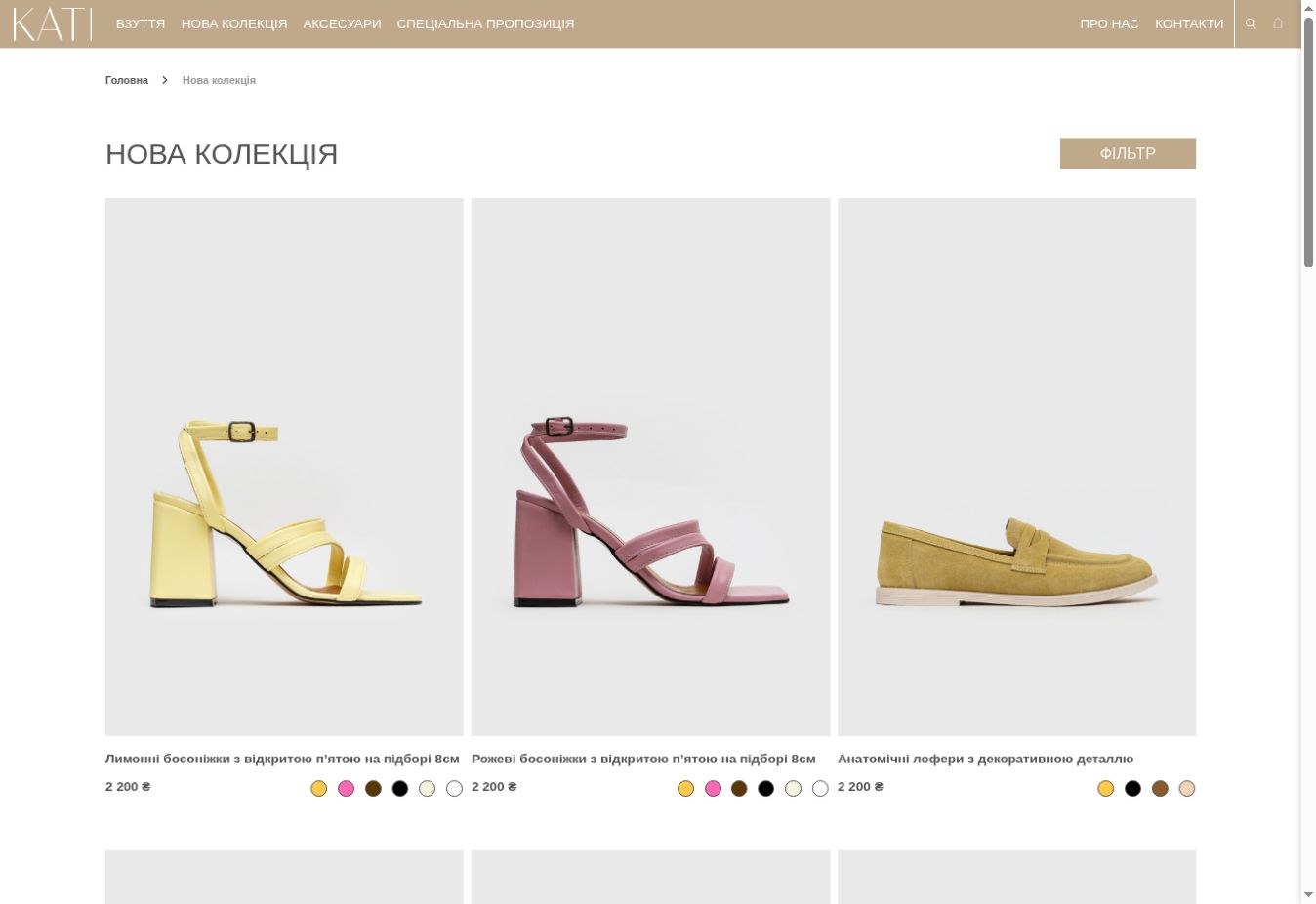
In online footwear retail, an attractive photograph is only the beginning. A customer needs to know whether a model is available in the right size, how it fits their style and what delivery and exchange involve. The KATI Shoes case explores the relationship between collection imagery, catalogue navigation and useful shopping information.
Project context
Visitors arrive with different intentions: browsing a new collection, finding a particular pair or choosing shoes for a season. A useful store structure supports each route without asking everyone to restart from a generic product list.
The central e-commerce challenge is comparison. Size, colour, season and heel height provide practical ways to narrow the selection, while photography communicates the character of each design.
Website structure
- New collections and footwear categories as distinct entry points.
- Filters for season, size, colour and heel height.
- Product cards presenting photographs, prices and available options.
- A shopping basket and a clear route towards checkout.
- Delivery, payment and exchange information to support decisions.
Categories establish what a visitor is looking for; filters clarify what will actually suit them. That relationship matters especially on a phone, where an unfiltered list can quickly become difficult to navigate.
Visitor journey
- Open a collection or category and narrow the available selection.
- Compare models, inspect the photographs and select a size and colour.
- Review delivery and exchange conditions before adding a product to the basket.
Visual approach
Product imagery carries much of the meaning in a fashion store. A restrained interface, readable product names and visible prices help customers assess the collection without competing visual distractions.
Expressive presentation also needs dependable shopping controls. Consistent filter placement and product information make it easier to move between models while keeping the comparison understandable.
Search and content
Organic search benefits from distinguishing collection pages, product categories and individual models. These address different intentions, from discovering women’s footwear to researching a particular style. Helpful category copy should explain the selection in natural language, while product content should answer purchase questions. Filter combinations require a separate technical indexing strategy; creating a URL for every combination is not automatically useful for search.
What this format delivers
This format brings brand presentation and everyday shopping together: collections attract attention, catalogue tools refine the choice and service information answers practical concerns.
Questions about the project
Why are filters important for footwear e-commerce?
They remove options that do not suit the customer’s size, season or preferred style, making the remaining selection easier to compare.
What should accompany product photography?
Clear variant information, relevant material and care details, and accessible delivery and exchange conditions. Imagery creates an impression; useful answers support the buying decision.
Planning a similar website?
Tell us about your business, audience and the action you want visitors to take. We can discuss the structure, content and scope of your project.